

Biotechnology as a Leading Trend in Cosmetics
The cosmetics industry is at a turning point. Ever-increasing consumer expectations regarding efficacy and the sustainable sourcing of ingredients are prompting manufacturers to look beyond conventional approaches to raw material sourcing. Biotechnology is one of the most rapidly advancing fields, particularly the use of biological processes to produce a new generation of cosmetic ingredients.
Biotechnology harnesses living organisms to produce substances with specific properties. Advances in molecular biology and metabolic engineering now make it possible not only to reproduce compounds found in nature, but also to design processes that yield ingredients with a desired composition and functionality. It is increasingly recognised as a technology with the potential to fundamentally transform how ingredients are manufactured for the cosmetics industry. The first commercial successes are already evident in the market. One of the best-known examples is hyaluronic acid, which just a few decades ago was sourced primarily from animal tissues, whereas today it is produced almost exclusively through biotechnological processes. Active ingredients, polysaccharides, peptides and lipids produced using microorganisms are now following a similar path.
One of the most important branches of modern biotechnology is fermentation, which, until a decade or so ago, was associated primarily with the food and brewing industries. Today, it is increasingly used in cosmetics. A notable example is fermentation-derived squalane, which has gradually replaced material sourced from shark liver and become one of the most widely used emollients in premium cosmetics.
Yet this is only the beginning. There is growing interest in the ability of microorganisms to produce functional oils and fats that could serve as alternatives to certain plant-, animal- or petrochemical-derived raw materials. Moreover, fermentation makes it possible to create ingredients with properties that are difficult or impossible to achieve using conventional production methods, opening up new opportunities for both functional and active ingredients.
Important!
Fermentation enables the creation of ingredients with properties that are difficult or impossible to achieve using traditional production methods, opening up new possibilities for functional and active ingredients.
Fermentation as a Platform for Lipid Production
At the heart of this technology are microorganisms capable of accumulating substantial quantities of lipids within their cells. These include certain yeasts, fungi and microalgae, collectively referred to as oleaginous microorganisms.
During fermentation, microorganisms utilise carbon sources, often derived from industrial by-products, converting them into valuable, lipid-rich biomass. A key advantage of this technology is the ability to conduct the entire process under controlled conditions within a bioreactor. Unlike agricultural cultivation, production is not dependent on land availability, weather conditions or seasonality. This enables highly consistent quality parameters and, consequently, greater supply chain predictability.
Fermentation also creates opportunities to use waste feedstocks and by-products from other industries, aligning with the principles of a circular economy. A single production process can therefore address challenges relating to manufacturing efficiency, security of supply and sustainability.
From Conventional Fermentation to Precision Ingredient Design
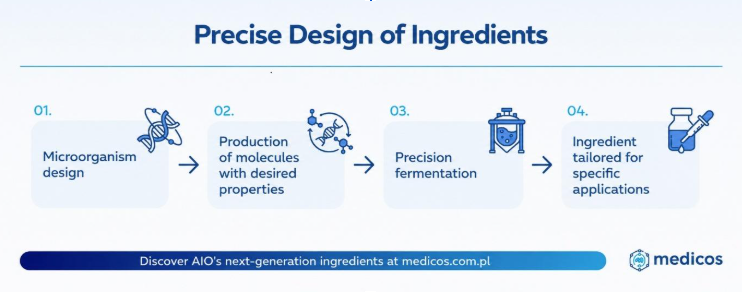
Modern biotechnology, however, extends far beyond conventional fermentation processes. Advances in molecular biology, metabolic engineering and synthetic biology now make it possible to design microorganisms capable of producing specific molecules with desired properties. Precision fermentation enables microbial metabolism to be directed towards the production of particular lipids, fatty acids, antioxidants and other functional ingredients. In practical terms, this means that ingredients can be created with compositions tailored to specific cosmetic applications.
Rather than searching for desirable properties in nature, it is becoming increasingly possible to deliberately design them at the biological level. This paves the way for a new generation of ingredients that combine efficacy, safety and a more sustainable production model.
Next-Generation Functional Lipids
For many years, cosmetic oils were viewed primarily as ingredients that provide emolliency and reduce transepidermal water loss. Today, the approach to lipids is becoming more sophisticated. Increasing attention is being paid not only to their origin, but also to their effects on sensory properties, formulation stability and skin compatibility. Today’s formulators expect an ingredient to deliver more than a single function. An ideal lipid should provide appropriate slip, ease of spreading and the desired after-feel, while also supporting emulsion stability and aligning with a brand’s sustainability strategy. This is precisely why biotechnology-derived lipids are attracting increasing interest.
In recent years, the search for alternatives to certain silicones and petrochemical-derived emollients has become a particularly prominent trend. However, this is about more than simply replacing one ingredient with another on a one-to-one basis. Fermentation-derived lipids often have more complex chemical structures, enabling them to influence several parameters simultaneously. In addition to their emollient properties, they may improve a product’s sensory profile, support emulsion stability or provide additional skin care benefits. These properties are directly linked to the lipids’ chemical structure. Fatty acid chain length, degree of saturation and the presence of free fatty acids influence, among other characteristics, spreadability, absorption rate and skin comfort. The ability to control microbial metabolism during fermentation makes it possible to design lipid compositions that meet specific application requirements.
Oils as Active Ingredients
Traditionally, cosmetic oils have been classified primarily as functional ingredients. However, advances in analytical methods and biotechnology are revealing an increasingly blurred distinction between functional and active ingredients. It is becoming increasingly apparent that some oils contain naturally occurring bioactive compounds that can act on skin cells. These include carotenoids, phytosterols, polyphenols and tocopherols. Their presence means that an oil can fulfil not only its traditional role as a carrier, but also actively participate in biological processes within skin cells. Omics research, including transcriptomics, is currently a particularly interesting area of investigation. These approaches enable thousands of genes to be analysed simultaneously, allowing researchers to observe how cells respond to exposure to a particular ingredient. This provides a much deeper understanding of the mechanisms of action of active ingredients than conventional tests based solely on individual biological markers. Transcriptomics can reveal not only whether an ingredient has an effect, but also which biological pathways it activates and which cellular processes its use may support. This approach is gradually changing how modern cosmetic ingredients are designed and evaluated.
The Future of Biotechnology-Derived Lipids
Although fermentation-derived lipids are only beginning to gain wider recognition in cosmetics, there are strong indications that their role will continue to grow. Advances in biotechnology mean that the future is not limited to replacing existing raw materials with more sustainable equivalents. Increasingly, the aim is to create lipids with entirely new properties, designed to meet specific skin and formulation needs.
One of the most promising directions is biomimetics: the design of ingredients inspired by natural processes within the body. The skin has its own complex lipid system, which is responsible for maintaining the integrity of its protective barrier. Biotechnology makes it increasingly possible to create lipids whose composition more closely resembles the natural components of the epidermis, potentially improving skin compatibility and providing more effective support for its physiological functions.
At the same time, personalisation is becoming increasingly important. Advances in diagnostic tools and a deeper understanding of skin biology will make it possible to create ingredients tailored to consumers’ specific needs.
In practice, this represents a shift from sourcing ingredients found in nature to deliberately designing new raw materials with predefined functional and biological properties.
There is every indication that, in the coming years, fermentation will no longer be viewed solely as an alternative production method. It will become a platform for creating entirely new classes of cosmetic ingredients, with properties designed at the biological level.
Biotechnology-Derived Lipids in Practice: Solutions Developed by ÄIO
ÄIO is one of the companies developing fermentation-derived lipids for the cosmetics sector. The Estonian biotechnology company emerged from research conducted at Tallinn University of Technology (TalTech), with the aim of developing more sustainable alternatives to oils and fats used across various industries.
Since its establishment, ÄIO has been developing fermentation technologies to produce lipids with a broad range of properties and applications. In cosmetics, this work has resulted in ingredients including ZymaLipid, a functional lipid ingredient that supports the sensory, biomimetic and formulation properties of products, and Fermira™ RedOil, a bioactive oil rich in natural carotenoids and sterols, whose potential has been demonstrated in both antioxidant studies and advanced transcriptomic analyses. Both ingredients illustrate how fermentation can be used to create a new generation of lipids that combine functionality, biological activity and a more sustainable production model.
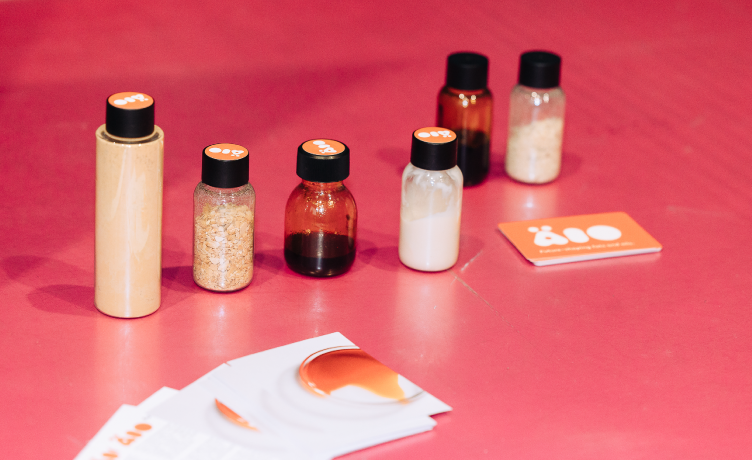
ZymaLipid is a fermentation-derived lipid ingredient developed for modern skin care formulations. Its high content of free fatty acids, particularly oleic acid, influences a product’s sensory profile, providing a rich, nourishing feel during application and a pleasant sensation of comfort on the skin. It may also support emulsion stability and act as a lipid co-emulsifier, making it an example of a multifunctional ingredient. Its composition reflects the fatty acids naturally present in the stratum corneum, aligning it with the growing trend towards biomimetic formulations inspired by the skin’s natural structure.
Fermira™ RedOil, meanwhile, represents a new generation of bioactive, fermentation-derived oils. Naturally rich in carotenoids, phytosterols and other secondary metabolites produced during fermentation, it combines emollient functionality with biological activity. In vitro studies have demonstrated high antioxidant activity, including the effective neutralisation of reactive oxygen species and free radicals responsible for oxidative stress. Even more interesting findings emerged from transcriptomic studies conducted on skin cells, which enabled the ingredient’s effects on the expression of thousands of genes to be analysed simultaneously. The analyses revealed modulation of pathways associated with the cell cycle and cell proliferation, indicating potential to support the skin’s natural renewal processes. Effects were also observed on genes involved in remodelling the extracellular matrix, the structure that provides mechanical support and maintains the integrity of skin tissues. The results also indicated regulation of processes associated with antioxidant responses, cellular defence mechanisms and the maintenance of skin homeostasis. This broad biological profile demonstrates that modern fermentation-derived oils can serve not only as a source of lipids, but also as a platform for delivering natural compounds that influence key cellular processes.


